I graduated from University three years ago this year, and it's been a difficult few years. Around this time of year, every year, thousands of recent graduates and A Level students are unleashed onto the world, and it's a shock to the system for pretty much everybody. After 18 or 21 years of knowing exactly what you're going to do; from following a system clearly set out for you, you're thrust into a world where there are no clear answers. The question on everyone's lips is "What do I do now?"
When I graduated, I was fortunate to have three months' leeway, as I headed to Mali on a government funded volunteering scheme. This is still one of the best things I have ever done, but I was incredibly naive going into it. All my life, everyone had said to me that, if you do well at school and go to University, you'll get a good job; it's one of the general understandings. Good grades + University = job. I even had work and volunteering experience - surely the equation was foolproof?
When I came back from Africa, I began the process of job hunting. I hated my course at University (it was a subject I loved at school, but really wasn't very good at on a higher level), but had thrown myself into volunteering and travel, and knew that I wanted to work in the charity challenges sector; preferably on the charity side, but either charity or travel would do. I didn't think I was asking too much; I'd led a group of volunteers in fundraising for our Kilimanjaro climb, I'd been elected on the RAG committee for most of my time at University, I've been involved in charity one way or another for most of my life. I'd also got a lot of work experience - I got my first job when I was 15 and have rarely been out of work since, even working pretty much full time when at University. Surely I'd done everything right?
Unfortunately, I was about to find out, along with a lot of my friends, that it still wasn't enough. As a result of the economic downturn, jobs were thin on the ground, and I was struggling to find even cafe or restaurant work - something I had a lot of experience in - never mind the career in the Third Sector that I dreamed of. I faced rejection after rejection, until I came to the conclusion that I needed more experience.
I'm very fortunate to have supportive parents, so I was able to accept a place on an internship with the NSPCC, commuting for 5 hours each day, to work for free in the HR department of their office in Leeds. Surely, I thought, surely this will gain me some contacts and open some doors for me? I did manage to get one interview out of it, and it was an interesting experience, but even three months' experience here wasn't enough to get me a job. I was still applying for work in the charity sector - mainly fundraising - and landed an interview as a Student Fundraising Coordinator for a cancer charity; my dream role.
I was thwarted again - the constant feedback was that I was interviewing well, but I just didn't quite cut the mustard. I was competing against hundreds, if not thousands, of people in the same situation as me, and all seemed to have the edge on me one way or another. The feedback from this interview, was that York RAG was just too small, so I didn't have as varied experience as other candidates. Great.
I'd done some research for the role however, and found that the charity used a provider called Student Adventures to facilitate the challenges, so I began looking for another route into the business. They were recruiting for people to lead groups of people on the challenges (as I did with Kilimanjaro), and I thought that more experience in this area couldn't hurt. I called and asked if you had to be a student - they said I didn't, and they encouraged me to apply.
By this time, I'd grown sick of living with my parents, and so had taken a job working in a cafe in Leeds, moving in with a few of my friends in the student area, while I was trying to find something else. My friends were all in the same boat as me; recent graduates, skint and working in retail until we managed to work our way into the roles we wanted to have. (More on my life then,
here).
I was accepted as an Adventure Leader, and invited to an AL weekend in the Peak District, for a briefing, and I became excited once again about the possibilities ahead of me. (Student Adventures has recently gone into liquidation, leaving students stranded at Gatwick on their way to Kilimanjaro, and hundreds of more having worked hard to fundraise all year, and unable to participate in their adventure.
I won't go into detail here, but I was incredibly unimpressed from the moment I started working with them; they seemed highly unprofessional, interested in only the big glitzy RAGs that would bring in all the money, and I ended up leaving my role as an Adventure Leader because of this. My heart goes out to all students and RAGs affected by their closure. I know how much hard work, preparation and excitement goes into preparing for something like this, and to have it snatched away from you with no warning or explanation is incredibly cruel).
Without my role as an Adventure Leader, I was working more and more hours, and taking on more and more responsibility at my cafe job, with little success anywhere else. I was earning a pittance, working 50-60 hour weeks (some of it unpaid) in a job I hated, with no money to even socialise with my friends, let alone take part in the travels I'd dreamed of. I was incredibly unhappy, and struggling more and more to see the light at the end of the tunnel. I felt an incredible sense of unfairness - I'd done everything right, hadn't I? I'd done well at school, been to University, worked for free, volunteered, worked lots of different jobs. What else did the world want from me? I honestly had no idea what else I could do, and I was beginning to give up on my dream.
After a year, our tenancy ended on the house, and I had a dilemma. Did I stay in Leeds, in a job that I hated, or did I take a risk, move back home at the age of 23, and try all over again to gain some experience in the world of charities and travel? I was torn; I couldn't see a happy ending either way, but with all my friends leaving Leeds, I decided to take a risk and do the same.
 |
| So bored I dyed my hair pink! |
I don't think my parents were particularly happy about me moving home again (and neither was I) but they were happy to accommodate me for a while. I think they thought I was mad for giving up a job with regular hours, but it was making me so ill and unhappy that I really couldn't see any alternative. My idea was to work part-time, so I could pay my parents some rent, and volunteer as much as I could, to gain as much experience as possible. My problem was that my parents live in the middle of nowhere. There's very little volunteering to be done in a sleepy village in West Yorkshire, and to travel much further was financially unviable. I became more and more unhappy, as I really had no idea what to do.
I applied for a job at my local restaurant, just waitressing. On my first shift, I was shown the ropes, then when I proved that I had done this many, many times before, I was given my own section, and my 3 hour trial shift turned into an 8 hour shift without a break. I cried all the way home, as all I could see was me going from one crappy job to another, with no time to do anything but work, and the volunteering would go down the pan.
I spent two days crying (and I wouldn't say I'm a crier) because I didn't know what to do. My parents would be disappointed if I quit (any job is better than none), but the thought of going back panicked me and made me feel claustrophobic. I did quit, against my better judgement and to my parents' disappointment, but I spent the next few weeks constantly applying for anything and everything, and eventually found a part-time job in the next village. It was still cafe-work, but was much nicer, and was definitely part time.
I was still having little luck with the volunteering, until I was invited down to London for an interview to become a VSO leader in the local community. At the same time, my perseverance was paying off, and I was invited to an interview at a small travel company in London. I was accepted into the VSO role, and discouraged (although not declined from) the travel role, as I didn't have enough travel experience. I'd also had many rejections, and I had to force myself to power through and keep applying. Surely my luck would come through one day?
 |
| Walking the dog was my main form of entertainment at home! |
Around this time last year, I'd applied on a whim, an hour before the deadline, to a student travel company, specialising in volunteering and adventure travel. I expected nothing from it, but saw no reason not to apply, so sent off my CV and covering letter. The next day, I was invited down to Tunbridge Wells for an interview! I had no idea where it was, and had no money to travel down there, but wasn't going to let a little thing like that stop me! My stepdad works in Reading during the week, and as luck would have it, he was travelling down there on the day of my interview, and travelling back up north the day after, thus saving me most of my train fare (and my parents were lovely enough to lend me money for this and my hotel).
I was very nervous, and set up for rejection at this point, but saw no reason not to go for it. I headed down to Reading at 2.30am on the morning of my interview, then headed to T Wells from Reading. I spent a whole day with a group of lovely people, who I was sure were more qualified than I was, and to my amazement, made it through to the second stage that afternoon!
I had a one-on-one interview (I'm pretty sure I was delirious from tiredness at this stage) then headed back on the train to Reading. Not even an hour later, I had a phone call from the sales manager - he'd love to offer me the job. It was based in Brighton (didn't have any idea where that was at the time) and it was Sales rather than Customer Ops as I'd originally applied for. Did I want it? HELL YES!!
I'm not going to lie, I might have cried on a crowded train headed for London. I didn't have enough credit on my phone to call anyway (perils of not working) so I couldn't even call my Mum. She did, eventually, ring me to see how I'd gotten on, and my first words were "So are you going to come and visit me in Brighton then?!"
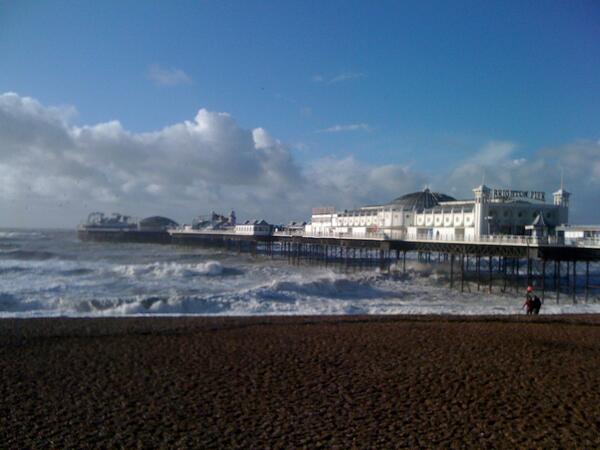
I was shaky, tired, and honestly couldn't believe it. After two and a half years of not getting anywhere, I'd finally found my way into my dream career! Moving to Brighton was going to be a sacrifice (I hadn't realised quite how far south it was), as I knew nobody down there, and it was very far away from my support system of family and friends, but I'd have agreed to anything at that point - I'd done it!
One year on, and moving to Brighton is the best thing I've ever done. I'm doing well at my job, I've found some amazing friends, and a work for an incredible company. I have incredibly supportive management, have made friends and contacts all around the world, and am finally on the way to where I want to be. It's still hard work, and it's still going to be hard work to get there, but if there's anything I've learned, it's perseverance and determination really do pay off.
Many graduates and students out there are facing the same dilemma I did, and I'm not going to lie to you, it's not easy. My advice to you:
- Don't give up! It might not happen straight away, but remain focused and determined, and put the effort in, and it will pay off one day.
- Don't be disheartened. Life will seem crap sometimes. It might seem crap all the time. One day it won't be, and you've got to believe that.
- Take chances. Apply for things you normally wouldn't, in places you haven't considered living in. Apply above your belt, and apply for jobs you know you can do. Your efforts will pay off.
- Make sacrifices. Moving hundreds of miles from home might seem inconceivable to you. It's not something I was keen on. It has been the best thing I've ever done, so keep it in mind.
Most of all: BELIEVE IN YOURSELF. YOU CAN DO IT! I believe in you :)


