Showing posts with label Europe. Show all posts

Saturday, 1 August 2015

Brighton Pride 2015

It's almost two years since I began living in Brighton, and I only have two weeks left here, so I thought it would be ridiculous of me not to go to Brighton Pride this weekend. This is my second Pride here in Brighton, and for the past 18 months I've been living and working in Kemptown, the heart of the gay community here.

Whilst I am hugely liberal, and love the ideas, ethos and community spirit behind Pride, crowds of people (especially people off their faces) aren't really my thing, so although I went to look at the decorations last year, I stayed away from the actual event as much as possible.

I'll be leaving Brighton in mid-August and heading off to pastures new (and green hopefully, as I'll be in Oxfordshire!) for an amazing new job, so I decided to man-up and at least see the parade this year. I'm currently 'homeless' and living on the floor of my amazing friends - fortunately they wanted to see it too, so at least I had company. Our friends from work were on one of the floats, so that sealed the deal - we definitely couldn't miss it this year!

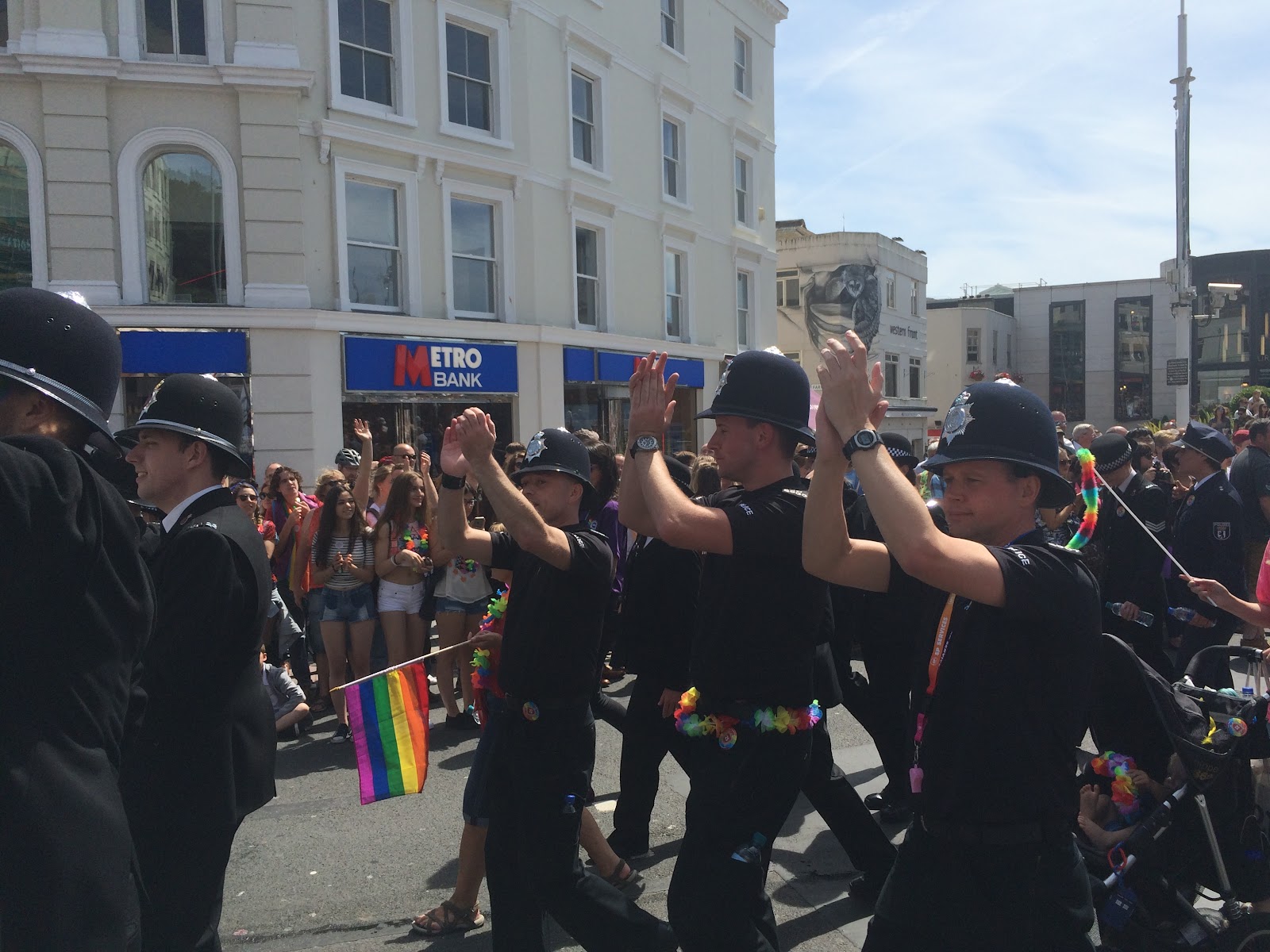
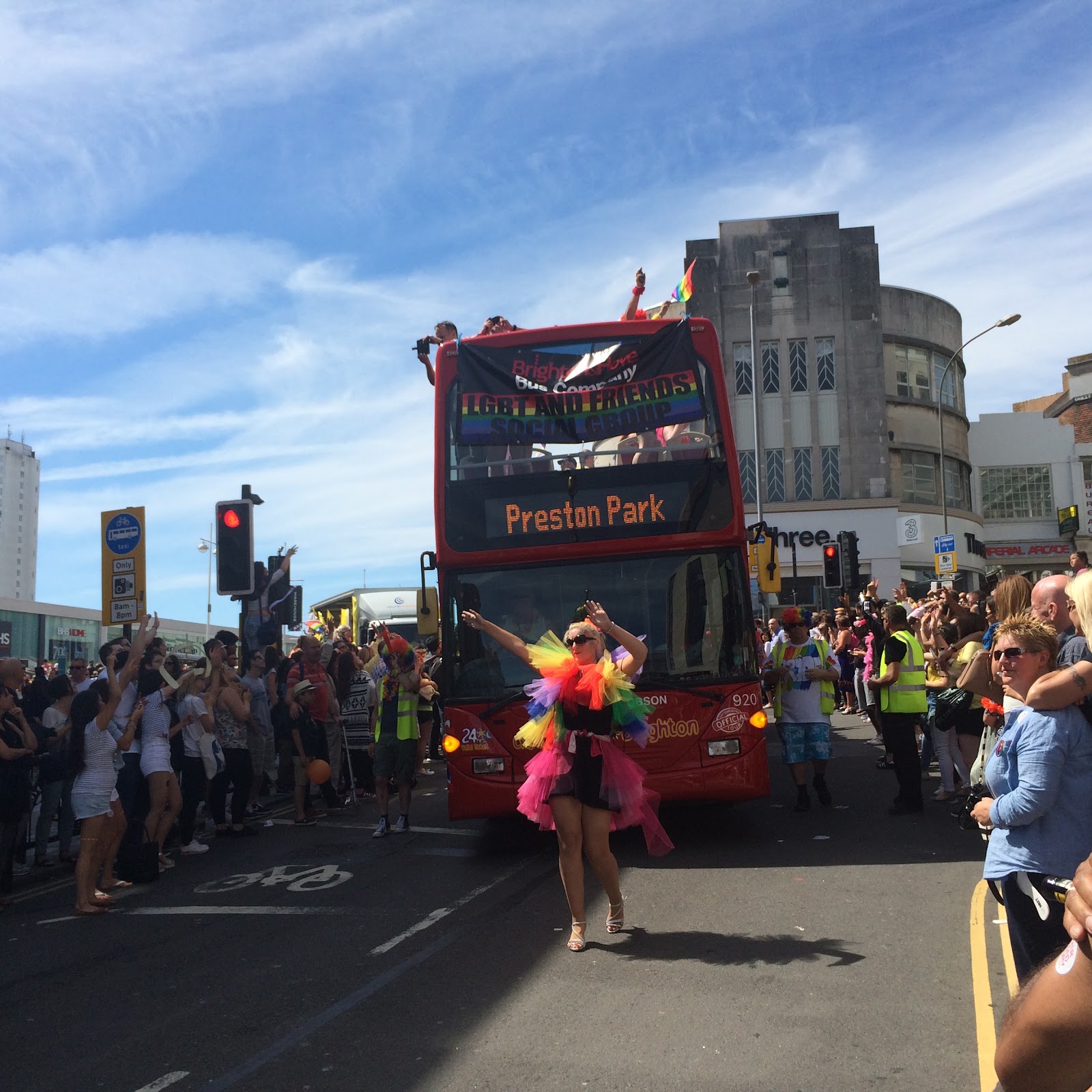
The parade was due to start at 11am from Hove Lawns, and work its way through Brighton, finishing in Preston Park where the main event is due to continue long into the night. Although the start was delayed by an hour due to a bomb scare (which triggered 'suspect package' jokes throughout the Twittersphere) and rerouted slightly, when it got going it was amazing! Thousands of people lined the streets of Brighton, covered in rainbows and outlandish drag costumes, waiting to see the floats. Each float was run by a different business or organisation, and each had its own theme, and all were amazing!!

My favourites were the Dogs Trust (MASSIVE dog on the back of their float), all the emergency services (hot fireman on stilts and a bunch of paramedics doing the Conga helped this) and Unite, which was super colourful. It genuinely made us all feel really emotional as they came past; there were people from all walks of life, all celebrating their freedom and right to express themselves. From parents of gay and lesbians, to people marching for countries who don't have the same freedom (there were a LOT), and even a small group of Christians; everyone clubbed together, and made their point with an incredible festive atmosphere. I don't think I've ever heard so much ABBA, Madonna and Lady Gaga in such a short space of time. ;)

They say a picture is worth a thousand words, so rather than me rabbiting on, check out my pictures below!

Brighton Pride 2015

Brighton Pride 2015

Brighton Pride 2015

Brighton Pride 2015

Brighton Pride 2015

Brighton Pride 2015

Brighton Pride 2015

Brighton Pride 2015

Brighton Pride 2015

Brighton Pride 2015

Brighton Pride 2015

Brighton Pride 2015

Brighton Pride 2015

Brighton Pride 2015

Brighton Pride 2015

Brighton Pride 2015

Brighton Pride 2015

Brighton Pride 2015

Brighton Pride 2015

Brighton Pride 2015

Brighton Pride 2015

Brighton Pride 2015

Brighton Pride 2015

Brighton Pride 2015

Brighton Pride 2015

Brighton Pride 2015

Brighton Pride 2015

Brighton Pride 2015

Brighton Pride 2015

Brighton Pride 2015

Brighton Pride 2015

Brighton Pride 2015

Brighton Pride 2015

Brighton Pride 2015

Brighton Pride 2015

Brighton Pride 2015

Brighton Pride 2015

Brighton Pride 2015

Brighton Pride 2015

Brighton Pride 2015

Brighton Pride 2015

Brighton Pride 2015

Brighton Pride 2015

Brighton Pride 2015

Brighton Pride 2015

Brighton Pride 2015

Brighton Pride 2015

Brighton Pride 2015


Thursday, 28 August 2014

How to cope with illness when travelling

It's everybody's worst nightmare; stranded in the middle of nowhere, with little knowledge of the language, and suddenly you fall ill.

When you travel, you have to accept that a certain amount of illness is part and parcel of the experience. You're subjecting your body to things you've never been near before, you'll probably be exhausting it (whether through hours on a bus or plane, or nights of partying) and you'll find that the standards of hygiene don't quite meet those back home. 

Wherever you go, you'll likely have an upset stomach of some kind. You'll be eating new food, drinking different water, and your body takes a while to adjust.

Top tips:

  • Stay hydrated. Massive cliche, I know, but it's so important! Being dehydrated makes you feel so much worse! Don't just rely on water, you need to replace salt and sugar as well. Rehydration salts are vile, but do the job, and a doctor actually recommended Coca Cola to me. Make sure it's flat (fizzy is not good on a poorly tummy) and it replaces any sugar you've lost.
  • Avoid it in the first place. When travelling in Africa, I steer clear of mayonnaise (no fridges/unreliable electricity) and fruit/veg without a skin unless it's been cooked and is piping hot. Not foolproof but it's better than nothing.
  • Don't use Imodium unless you have to. It's very handy for long journeys etc., but usually when you have an upset stomach, your body is trying to get rid of stuff. It's unpleasant, but usually best to just let it. 
  • Antibacterial gel! I swear by it when travelling, and use it whenever I feel the need. I have a pretty hardy immune system, but this helps avoid any unnecessary germs.

I've had the misfortune of health issues pretty much every time I've been away! In the UK, I'm generally very healthy; I'll have probably one cold a year, and apart from regular headaches, have no other maladies. Both times I've visited Africa however, I've had more serious problems. 

The first one was my trip to Tanzania. I suffered pretty badly from altitude sickness when climbing Kilimanjaro; I didn't eat for around 4 days and pretty much exhausted myself from the effort. This by itself wasn't serious; the guides were keeping an eye on me, and as soon as I descended from the high altitude, I'd be absolutely fine. They'd stop me from climbing if it was going to make me seriously ill, so I wasn't particularly worried.

It did have some side effects however. On the day before the summit attempt, I was really quite ill. My body was running on empty, and I was suffering from exhaustion and AMS. I went to sleep as soon as I reached camp, and woke up just as everyone was about to set off to climb (they'd missed my tent in the darkness and so I'd missed breakfast). In the rush to get ready (bear in mind it was midnight, pitch black, and around -20C) sun cream didn't even occur to me. I originally had my buff (scarf) covering my nose and mouth, but I couldn't breathe anyway, so the guides pulled it off my face.

The long and short of it is, that the day after I summitted, I woke up feeling a bit strange. It was confirmed by the look on my tent-mates' faces that my face was very swollen and covered in pus. I didn't get a good look until later on that day, but I'd given myself second-degree burns from the sun and the wind!

After-sun wasn't really going to cut it, so I headed to the pharmacy to see what they recommended. After they tried to sell me sun-cream, however, I had to accept that they probably didn't have anything that could help so I treated it myself with anti-histamines, antiseptic, moisturiser, and by keeping out of the sun as much as possible. Fortunately, I was very lucky and it healed relatively quickly with no scarring. I'm now very careful about my face in the sun, as I'm sure it will have done some long-lasting damage, but it turned out ok in the end. 

I swear by Lifesystems First Aid Kits, but you can easily make your own instead

I was fortunate to be travelling with a group that had plenty of antiseptic wipes and antihistamines they could lend me, as I hadn't brought enough for myself. I'm sure I could have gotten them somewhere in Tanzania, but it wouldn't have been the easiest, and so now whenever I travel I make sure I'm stocked up on as much as possible. I always carry a first-aid kit with painkillers, bandages, antiseptic, anti-histamines, plasters, safety pins, Imodium and anything else I can squeeze in. It's come in handy several times (not just for me) and guarantees you'll never have to panic about finding somewhere. I try and carry a few clean syringes with me as well - I've never had to use them *touch wood* but don't ever be afraid to ask a doctor to use your syringes instead of theirs if you're concerned. Better to be safe than sorry!

Top tips:


  • Wear suncream! I'm usually pretty good at this, and preventative is better than cure! 
  • Take a fully stocked first aid kit with you
  • I now take aloe vera gel wherever I go. The Banana Boat stuff is pretty good, and it's so soothing on sunburn
  • Stay out of the sun. This was quite hard as I was on safari, then heading to Zanzibar, but I covered up as much as possible, and it definitely helped it heal quicker.

My next major mishap occurred when I was living in Mali. I'd made it through almost the full three months - I had just 2 weeks left - with no major illness apart from a couple of bouts of food poisoning. Not bad for one of the poorest countries in the world! I'd been looking forward to 1st December for ages; I love Christmas, and to me that's the day to begin celebrating! I was looking forward to sharing stories with the Malians (most of them Muslim) and to begin listening to Christmas music! I woke up that morning feeling a bit lousy, but that's kind of normal over there. You're usually fighting off some kind of malaise, so not being hungry wasn't overly unusual.

I headed out to work, still feeling ok (although not brilliant) but as the day went on, I started getting goosebumps, and felt a bit run down and cold (it was about 35C so definitely not cold!). I headed back from work early, and took my temperature (I ALWAYS keep a thermometer in my first aid kit when I'm travelling to Africa) and it was quite high at around 38C. I took some paracetamol to bring it down, and tried to sleep, though still felt a bit iffy. I Googled my symptoms, and I had 7/10 of the symptoms of malaria (headache, chills, high temperature, muscle aches, sore stomach, generally feeling unwell, fatigue...) - general flu-like symptoms, but something to keep an eye on.

We had a rule amongst the volunteers that, if you had a fever, you had to go to the hospital to get checked out. As mine was fluctuating around the 37-38C mark, and wasn't overly high (probably due to the paracetamol) and I felt ok, I was very reluctant to go to the hospital, sure that everyone was making a fuss about nothing. I agreed to check however, and headed to the 'Clinique Pasteur' - the best hospital in town, and the place that few Malians could afford to be covered by. 

I was seen quickly by a doctor, sent for a blood test (just a pin-prick on my finger) and was sent back to wait for the doctor again with the results in my hand. I couldn't resist a quick peek, and sure enough, I had tested positive for malaria. 

Very fortunately, and due to everyone persuading me to go to the hospital that night rather than wait for the next morning, they had caught it very early, and as long as I took some very strong drugs, I didn't have to stay in hospital. There are several different strains of malaria; one that doesn't kill you very often, but does stay in your system and re-infect you years later, and one that is fatal if not treated very promptly. I'd tested positive for falciparum - that lethal type - so had I waited overnight, I could have become very poorly, very quickly. 

The most galling thing for me was that I'd taken my malarone (anti-malarials) without fail (apart from puking one up near the very beginning), used a mosquito net every night, and used insect repellent; some of my group weren't even taking their anti-malarials. Nothing is fool-proof with malaria, unfortunately, but I will always take anti-malarials. As well as protecting against the disease, they massively reduce the symptoms, so had I not taken them, I would have felt a great deal more poorly than I did!

Top tips:


  • Always trust your instincts. Don't be a hypochondriac, but I felt off from the first thing that morning, and I was right. Trust your body and listen to it.
  • If you have a temperature when travelling, get it checked out. All kinds of bugs and diseases cause a fever, and it's better to be overly cautious and potentially catch something early, than to leave it and become ill.
  • Take precautions. I will always, always use anti-malarials and mosquito nets. Malaria is not fun, and not something I'd wish on anyone, so anything you can do to avoid it, do. 
  • Make sure you know where the nearest hospital is. Had I been further away, or not known where the hospital was, I could have become more ill than I did. Make sure you have travel insurance, and that you have your documents to hand, as some places won't treat you until they have proof that you're covered

Please don't let the possibility of becoming ill stop you travelling! If you let it become a barrier, you'll never go anywhere, and the risks are really quite small. If you're careful, you'll be absolutely fine, and if you become ill, get treated as soon as possible. Both mine have now become great stories, and it's just another thing that happened on my travels!

Tuesday, 26 August 2014

Food and Travel

Two of my favourite things are food and travel, so whenever I get to combine the two, you can guarantee a happy Sophie!

Europe is the best place I've been for food (so far!), and I still can't decide if I prefer France (wine, cheese, bread and pastries) or Italy (wine, cheese, pizza, pasta, ice cream!)

Food, for me, captures the essence of the place you're in, and is one of the best ways to experience the different countries, cultures and ways of life. I love how many different things are eaten around the world, and I think it's a key part of travel! My housemate loves to travel (she's been to far more places than I have) and yet the food doesn't really interest her. Our other friend, however, has just been to China and posted so many pictures of food - I loved it! From scorpion to Sicheuan Hot Pot, I wanted to be in China experiencing it with her, and to me it's one of the best bits about travel. I think you're either a foodie or you're not, and I definitely am!

Africa has not been the most exciting place for food (although parts do have some pretty good recipes!), with the exception of Zanzibar, which had some pretty amazing seafood! I was quite a picky eater as a child, and I still don't eat much meat, but I've tried to broaden my tastes as an adult, and I'm glad I have. 

I'd never eaten seafood before I went to Zanzibar, apart from trying it a couple of times as a kid and declaring my disgust. My parents once tricked my brother and I into eating calamari at a tapas restaurant by claiming they were onion rings, and that was enough to put anyone off!

I played it quite safe in the rest of Tanzania, but in Zanzibar I went on a boat tour around the archipelago. I was sat on a mound of sand, literally in the middle of nowhere, and the guides were BBQing fresh fish right in front of us, so I decided not to be such a wuss and try whatever was put in front of me. I went from no seafood to eating octopus, prawns, crab, lobster and a meaty fish which I think was barracuda, although I could be wrong. 

I wasn't (and still am not) a big fan of shellfish, and I found the octopus quite tough with very little taste, but I was surprised to find that I LOVED the lobster and the barracuda! They had a whole lobster for each of us (they're so fresh and abundant out there, it's not an extravagance) and they'd cooked the barracuda with some amazing spices, and it was quite honestly the best meal I've ever tasted.

Since then, I've been determined to try everything once, including goat and pigeon in Mali (although if I ever go to SE Asia, I might have to draw a line at scorpion...), although nothing else has become a firm favourite. I haven't really travelled anywhere particularly foody yet, however, so there's still time!
Mali definitely wasn't great for food. It's one of the poorest countries in the world, and apart from an ex-pat community of missionaries and volunteers, it has little to no tourism. Most of the food out there was rice, meat and sauce, as well as a touch of the French influence with fresh bread every morning, and an attempt at patisseries. 

I was there for three months, and I survived mainly on eggs and bread. The only food really safe to eat was bananas, and they went off incredibly quickly in the heat. Watermelons were safe too (anything with a skin on basically) but they were harder to come by. I gave myself food poisoning on my first day there (I still have no idea what with, I didn't eat anything exciting!) and a couple of other volunteers had a literal bug in their stomachs, so we all had to be very careful what we ate. The first meal I had when I came home was vegetable chilli as I was craving vitamins!

(Actually, one of the best foods out there was aloco (fried plantain). I did have a go at replicating it when I was back in the UK, but with little success unfortunately!)

I love food like chickpeas, pulses and spices, so I'd love to go to north Africa (Morocco etc) to try the food there. Here in the UK, there's a show called the Great British Bake Off that I'm a bit obsessed with (very clever people having bakes judged weekly to find the star baker! #quicksynopsis) and I've always wanted to try my hand at some of the recipes.

I love cooking - I'm not amazing at it, but I can usually follow a recipe, so when bread week appeared on GBBO, I really wanted to try them all! It was a toss up between Martha's bread (a sunflower with a whole cheese baked inside the bread, and chutney in each of the petals) and Iain's (moroccan plaited loaf with a bessara dip) but as Iain's was more something I'd eat normally, I decided to give it a go! (Recipe available here).

Apart from being so worried about the plaiting that I forgot to include the goat's cheese, I think it turned out alright! Will definitely be trying my hand at other bakes in the future!

I love trying recipes from all around the world - it's another way of being an armchair explorer until I actually get to go there - so if you have any recipes to share, please share them in the comments!

Tuesday, 19 August 2014

Capri

When I was about 15, my friend Ellie and I read a book by Belinda Jones that was one of the main reasons I chose to travel to Sorrento this summer - 'I Love Capri.' It's a typical girly book, with the main focus on romance, but set in a location that Belinda describes so vividly, I was transported there with every page. I literally couldn't put it down (and have read it many times since) and I knew I had to visit someday.

When my friend Mel and I were looking for a European holiday this summer, Sorrento seemed pretty perfect. Not only was it near Pompeii and Vesuvius to satisfy the history geek in me, it was close enough to Capri that I could finally visit (10 years later!) SOLD!

You can catch a ferry or a hydrofoil to Capri from both Sorrento and Naples - we went for a ferry as it was cheaper, and there didn't seem to be much difference otherwise. One thing that I will mention about Capri is that it's expensive. We knew this before we went, and budgeted accordingly, but I think I spent around 100 euros just in one day. Definitely worth it, but just something to keep in mind.

We took the ferry from Sorrento at around 9am, arriving in Capri just before 10am. The last ferry was at 6.45pm, giving us the whole day. You arrive into the Marina Grande, and can either get the bus or funicular up to Capri Town. Wanting to experience everything, we decided on the funicular on the way there, and the bus on the way back because, why not?! It only takes a few minutes, but like everything else in the area, Capri is very rocky and hilly, so it beat walking up there in 35C!

It would be pretty impossible to do everything in Capri in one day, even though it's tiny, so we narrowed it down to two definites - the Grotta Azzura and Monte Solaro. Everything else would be a bonus! We wandered around Capri Town for a while, getting our bearings, then decided to head onto Anacapri to get the chairlift up to Monte Solaro. Capri is known for being the home of the rich and famous, and many travel there to do a bit of celebrity spotting, but we were more interested in the scenery, so Capri Town held little appeal. If we'd had more time, we would have explored a little more. It's worth wandering around the maze of streets, spotting the five star luxury dotted on every corner!

You can buy a day ticket for buses on Capri for under 10 euros, and I'd definitely recommend it. You can get a bus to pretty much anywhere on the island, and although they're tiny and rammed full of people, it doesn't take very long to get anywhere and they're very frequent. We headed on the bus to Anacapri, then headed up the chairlift to the top of Monte Solaro. I assume you can walk to the top of here, but I didn't see anyone doing so. It's 10 euros for a return trip on the chairlift, which takes around 12 minutes each way. I was a little nervous at first, but you follow the gradient of the hillside, so you're never more than around 10 feet off the ground (though I don't imagine it would be a pleasant landing) and the views are just stunning!

We spent around 45 minutes on top, taking in the views, and sitting in the shade with a granita (sweet lemon juice over crushed ice - SO refreshing!). You could see for miles, and I could even re-enact the cover of Belinda Jones' book! We then headed back down the chairlift to to Anacapri to find the bus to the Grotto Azzura.

In her book, Belinda made the Grotto Azzura (Blue Lagoon) sound magical, so it was here that I was most excited to visit! It's around 13 euros for a ticket if you go directly there, or you can take a boat round from the Marina Grande for an extra 5 euros. If I could do it again, I'd do this, as I imagine the boat trip would be stunning! We got the bus there from Anacapri however, and managed to find the steps down to the grotto.

We were very confused for a while as to where to buy tickets from. There seemed to be nowhere to go at the bottom of the steps, but we knew we needed tickets. We asked a couple of Italians, who all seemed to say "On the bus!" so we trekked back up to the top of the cliff to the bus stop, to no avail.

We finally managed to find some Americans, who told us that you actually buy tickets on the boats at the bottom of the steps, so we trudged back down again to the platform at the bottom. To enter the Grotto Azzura, you have to go in a rowing boat with a singing(!) guide. You get on the boat, and are rowed to another boat to buy a ticket (presumably so you don't back out?), then back round and into the Grotta Azzura itself.

In the book, the main character enters the grotto when the sea is rough, and is soaked from head to toe (you have to lie down to enter the cave, as it's very low and if the waves are high, they don't let you in as you'd be dashed on the rocks!) Fortunately, the same didn't happen to us, and we we made it into the grotto safely.

The Grotta Azzura gets its name, because something in the rocks (some kind of composite or chemical, I forget what exactly) reflects the light and the water, making it appear the most brilliant blue! It was just as it was described in the book, and was definitely the highlight of the trip for me. I could have done without the singing from the guide however - I think he was trying to ensure a tip, but it just made it seem a bit naff and touristy. It was also spoilt when, as we reached land again on our return, the guide wouldn't pull up to the platform until we'd given him a tip. It felt like I was being blackmailed, and I wasn't too happy about it.

After this, we were hot and tired, so we headed back to the Marina Grande to have recover. We'd planned to swim in the sea and relax until it was time for the ferry, but we'd managed to visit in a heatwave, and we'd barely been in the shade all day. The bus back to the Marina Grande was horrendous - hot and packed - and I felt incredibly sick on the way back down. I think we spent most of the trip trying to avoid heatstroke!

We'd originally said that we weren't going to sit in the main squares in Capri (they're extortionately expensive) but desperate times call for desperate measures, and I paid 5 euros for a Diet Coke that was the best thing I've ever tasted! People watching in the square was highly entertaining, and there was just time for a dip in the sea (although I scarpered pretty quickly when I saw a jellyfish!) before catching the ferry back to Sorrento in time for dinner.

Now I've built Capri up in my imagination for 10 years, and it pretty much met my expectations, which is saying something! There are things we didn't manage to do (such as visiting the lighthouse), but Capri is absolutely stunning, so even if you only visit for the scenery it's worth it. It's not something to do on a budget, and the fact that it was quite touristy dampened the experience of the Grotta Azzura, but it was still the highlight of my trip, and I'd recommend a visit to anyone!


Monday, 18 August 2014

Sorrento

This year, I went on my first 'proper' holiday in 3 years! Apart from a trip to Rome in 2012 and Krakow earlier this year, the last time I actually went away was to Spain in 2011.

I've always promised my friend Mel that we'd go away but I've never been able to afford it, so as soon as I got some semblance of money together we started looking for places to go. We're both quite different; I like an active holiday, and am not very good at lying on the beach for a week, whereas Mel loves being by the sea, so we had to make some compromises.

One place I've always wanted to go is Pompeii, and Mel agreed, so we started looking for places on the Amalfi coast that had some kind of beach (it tends to be rocky, rather then sandy around there). There were a few places we considered, but Sorrento seemed the most appealing, so we went ahead and booked it!

We stayed in a nice hotel called 'Settimo Cielo' (Seventh Heaven) up in the hills, around a 15 minute walk outside of the main town centre. It was basic and comfortable, and the staff were lovely (even when Italy beat us in the first match of the World Cup!); the one thing that really made it was the view over the Bay of Naples, with Vesuvius right in front!

 We spent the first few days wandering around and getting our bearings. There were three things that we really wanted to do while we were there; Pompeii and Vesuvius, Capri and Naples. Other than that, we were happy to explore and see what we could find.

Sorrento's main street is called the Corsa Italia, and although it's the road that leads to everywhere, it's also a place to avoid. The few shops and restaurants on here are overpriced, tourist tat, aimed at those too lazy to look elsewhere. Turn left off the street however, and you find yourself in a maze of backstreets with amazing restaurants, cute souvenir shops and lemons as big as your head! Of course there are places to avoid here as well, but you soon learn to spot them and find the gems amid the madness.

The street directly parallel with the Corsa Italia is the main souvenir street, and the streets perpendicular are the ones with the restaurants. We aimed to go somewhere different each night (although if you're on a little bit of a budget and aim to avoid the tat, your choice becomes somewhat limited) and I think I ate pizza six nights out of seven! My favourite restaurant was called La Basilica, tucked away on a side street close to the train station, and we ate there a couple of times. Great pizza, wine and dessert - what more do you need in Italy?!

There are three main marinas in Sorrento; Marina Grande, Marina San Francesco and Marina Piccolo. The Marina Piccolo is the largest (of course, because that makes sense(!)) and is where the ferries and hydrofoils to Naples and the islands leave from. The Marina San Francesco is the one in the middle, with a small beach area, and the Marina Grande a small, rocky area close to our hotel. We never actually visited the Marina Grande (although we could see it clearly from our room), but there are jetties there where you can rent a sunbed and umbrella for a day so you can swim in the sea).


Sorrento is built into the cliffs, so descending to sea level involves a fair amount of steep steps; not too bad on the way down, but it would have been a killer on the way back up (we're talking hundreds of steps in around 35C heat). Fortunately, Sorrento is a tourist town and someone has had the bright idea of building a lift into the cliff. For just 1 Euro (or 1.80 for a return) you can save yourself the climb back up, and I can safely say it's one of the best Euros I have ever spent!

One of my favourite things about the area, is that it's famous for its citrus fruit - specifically, lemons! I first heard about Limoncello in Belinda Jones' 'I Love Capri' (more about that later), and my friend Ellie made it when we were in Sixth Form. I've had it previous times I've been in Italy, but I was really looking forward to it here. Everywhere you walked, there were stalls with lemons as big as your head, and everything had lemon in it. What I didn't realise about Limoncello in Italy however, is that rather than Vodka it's made with 80% ethanol! It took me around an hour to finish my first shot - tasty but any more and I'd have been drunk on the spot.

If you ever go to Sorrento, I'd definitely recommend staying outside of the centre, if only for the views. We were fortunate enough to be walking distance from town, so we had best of both worlds (although we did get drenched in the frequent evening thunderstorms), but even if you're higher up in the hills there are regular shuttle buses into town.

The train station was around 30 minutes' walk from our hotel, with regular trains running to Naples, Pompeii and Ercolano (for Vesuvius). The Marina Piccolo was around the same distance, and it was from here that we got the ferry over to Capri. We never actually made it to Naples (we happened to visit during a heatwave, and after two days of sweating and avoiding heat stroke, we decided that it just wasn't worth it. I will definitely be returning to the Amalfi Coast, so I can always go back in the future). It's so easy to visit other places from here, and there's bits and pieces to do in Sorrento itself, even if only to sit amongst the lemon trees with a gelato!

Controversially, Sorrento is currently one of my favourite places in Italy, even beating Rome (although that could be explained by the fact that I'm a countryside girl rather than city, even if I am a major history geek!) Amazing food, amazing location, amazing views and lovely people - there's not much more you can ask from an Italian town, and I shall certainly be going back. Not for a while though - there's more to explore first!

Sunday, 17 August 2014

How do you travel the world if you're scared of flying?

Hi, my name's Sophie, I work in travel and I'm terrified of flying.

I know, sounds like the beginning of an AA meeting, right? I mean, lots of people are scared of flying, it's hardly unusual. But what if it's an intrinsic part of what you do?

In my job, I reassure people all the time. Of course Thailand is safe, you'll be absolutely fine. No, you're highly unlikely to get Ebola in South Africa, you're actually closer to the outbreak here in London... It's part and parcel of what I do, and I enjoy it. One thing I struggle with however, is reassuring nervous flyers.

I didn't set foot onto a plane until I was 13 years old, heading to the Canary Islands with my dad and brother. I'd heard stories of people being scared of flying, but that first time, I don't actually think I was too bad. My dad might remember differently, but I don't think flying bothered me too much. It was as I grew older, and became aware of my own mortality, that flying became more and more scary.

I think the first time I was properly petrified was the first time I went on holiday with my friends when I was 18. A couple of my friends were nervous flyers as well, and I don't think we helped each other much. In fact, the joint fear only justified our own individual nervousness, and so I was the most scared I have ever been. I started listening to every noise, and became aware of every movement, watching the eyes of the cabin crew to see whether it was normal.

My brother and I used to watch a lot of Air Crash Investigation on TV (a programme that analyses plane crashes, why they happened and what could have been done to avoid it), and rather than it reassure me, it made me aware of how many things could actually go wrong. There's one episode in which one of the windows in the cockpit blows out, and the pilot is sucked outside of the plane, only saved by the quick thinking of his co-pilot, who grabbed onto his leg. Somehow, miraculously, they managed to land the plane AND the pilot survived, but what caused the problem? Somebody had fitted the wrong kind of nut or bolt onto somewhere. One tiny thing and a massive problem occurred.

I think that's my issue with flying. I know all the statistics of it being the safest form of transport, but if you crash a car, you've got a relatively high chance of survival, or at least that paramedics will get there quickly enough to save you. If something goes wrong in the air, it's not the problem itself that will kill you, but the uncontrolled descent, loss of pressure and potentially exploding into a ball of flames. Chances of surviving a plane crash are very slim, and you'll potentially know about it for a while before you actually die. That's what scares me.

Channel 4 did a programme a couple of years ago called 'The Plane Crash.' (I know, I know, why do I do this to myself?) In it, they intentionally crash a plane into the desert to try and analyse what increases your chance of survival in the case of a crash? Should you brace? Yes, probably. Where should you sit? Well, that depends on how the plane crashes. Nose first, then clearly the back. Tail first, the front is your best bet.

Oh but, by the way, this is only going to help you if the plane crashes in a very specific way. If it doesn't skim the ground right, then you'll probably ignite the fuel tank and you'll die anyway.

The point of this is that, the older I've got, the worse my fear has got. It's now developing into a full-blown phobia. Take off is the worst; once the captain switches off the seatbelt sign I'm usually ok, but all the way through check-in and boarding, I'm an absolute nightmare. I have scars on my wrist from digging my nails into myself during take off; an attempt to distract myself from what I'm actually doing, and ward off a panic attack.

The worst I've ever been was on the way back from Kenya in 2010. I was sat right at the back of the plane, in the middle of the middle row, and couldn't see a thing of what was going on outside. I was to be trapped on the plane for another 8 hours, and I had a really, really bad feeling (something I've learned to ignore as it usually means nothing!) I'd just conquered Kilimanjaro and spent three weeks leading a group of 22 volunteers around Tanzania, but this was too much and I burst into tears and had a panic attack all the way through take off, much to the disconcertion of everyone around me (not that any of the cabin crew noticed).

Since then, I've tried to control myself. I've learned to sit near the window, usually over the wing, so that when I hear a noise I can usually look out and attribute it to something. I tell whoever I'm travelling with to ignore me being an idiot, as I'll sort myself out as soon as I'm at cruising altitude, and pandering to my fear will probably only justify it in my head in the long run.

I take deep breaths during take off, squeeze my eyes tight shut, and occupy my hands so I don't add to my collection of scars! One of the main things that's helped is telling myself that, there's no going back now. Even if something does go wrong, my panic at the beginning won't actually affect anything, so it's best just to stay calm!

When I came back from Sorrento this summer, this was severely tested when we had to set off into a thunderstorm. I had to stand by the window and watch lots of other planes take off safely before I'd even consider going to the gate, and had to force myself to board the plane. Of course we were absolutely fine, and didn't even experience any turbulence, but my brain just wouldn't listen

Recently, with the losses of MH370 and MH17, as well as crashes in Taiwan and Mali, all within a few weeks of each other, plane travel has once again come into the spotlight. Again, I know the statistics, and I know it's the safest form of transport. But it's not 100% safe, and I have to face up to that. My heart goes out to anyone affected by either Malaysian disaster, or any plane crash really, as I can't imagine anything worse. For some reason, MH17 scared me more than most. For a civilian jet to be blown out of the sky; that's something that I hadn't even considered could happen, and it really shook me up.

Travel is my life, however, and flying is something I have to do to facilitate that. I haven't let it stop me in the past, and I don't plan to let it do so in the future. My biggest test will probably be in Nepal in May; I'm finally hoping to do Everest Base Camp (if I can actually get the money together for the flights) so not only do I have to fly to Kathmandu, I have to take a flight in a tiny Twin Otter plane to the most dangerous airport in the world.

Lukla is a tiny airfield. set into the side of the Himalayas, and the start point of most treks in that area. To get there, you have to fly on a tiny plane in which you can feel every movement, and see directly into the cockpit from your seat. In recent years, there have been several crashes here, mainly because of the weather (although Nepali airlines don't have the greatest safety standard either). The most recent was when clouds descended suddenly, causing the pilot to miss the runway and clip a fence on the edge of the airport, killing everyone on board.

Everest has been my dream for a while now, and I've already put it off a couple of times because of lack of funds. I have to do it, and the only other alternative is to add a 6 day trek in from Jiri (which I would do if I could, but I can't get the time off work!) I could do this with every trip; I could take buses and cars and trains, but the trips would take three times as long and it just wouldn't work in the long term. It's just not sustainable, and it would be silly to even consider it.

I've already started having nightmares about the flight, and nothing I've read on it has been reassuring (seasoned flyers have been terrified by it, so there's no hope for me!) The worst bit is that it's not an irrational fear, so I can't tell myself that I'm just being silly, as it is a possibility that the worst could happen.

I know I'm not as bad as some people; I've always been able to get onto the plane, and I've never had to take valium or any medication before doing so. This doesn't make my fear any less real though, and it still affects me more than I'd like.

I can't let this fear take over however, otherwise what's next? My dream of being a travel writer would be over, and I'd never be able to see the world like I've always hoped I would. I've overcome it before, and I will overcome it again. Sometimes you have to accept the risks in life, as the end goal is worth it, and I have to remember that (just don't tell my Mum!).

Monday, 30 June 2014

Krakow

One of the best things about my job now, is actually having the time and (almost) the money to be able to do the things I've always wanted to do! Back in March, my housemate and I both had a week off at the same time, and wanted to go somewhere we'd never been before!

We narrowed it down to Europe to reduce the flight costs, and spent a few evenings trawling through all the obscure places we could go to (Transylvania anyone) then comparing the flight prices. One place that kept cropping up was Poland - I'd wanted to visit Auschwitz ever since high school (it's the history geek in me), and the prices were coming out ok so we bit the bullet and booked it! 

We went for around 4 days, arriving early on the Tuesday and leaving at lunch time on Friday, giving us around 3 days to explore! The main reason we'd decided on Krakow was for Auschwitz, so I spent the next couple of weeks researching the rest of the city to find the best places to go. We found a hostel (Atlantis Hostel - highly recommended) based on its awesome reviews on HostelWorld (we weren't disappointed) and were ready to go! 

When you land in Krakow, it's very easy to find your way to the city centre, and lots of people speak English. We'd got directions from our hostel beforehand, but even if we hadn't I'm sure we would have been fine. There is a bus outside the airport directly to the city centre, then there are trams to take you where you need to go.

We stayed in Kazimierz (the Jewish Quarter), although Krakow is small and it was still walking distance to the Old Town. On the first day, we went straight to the hostel around lunch time, then went for a walk around Kazimierz, loaded with a map that the hostel had provided. We also booked our trip to Auschwitz (around £20 with transfers to and from the hostel, entrance fee and a guide - a good price that you'll find in most hostels) for the following day. 

Kazmierz is really pretty, and full of history! We walked for around an hour, just exploring, and ended up at the river. There are free walking tours around this area, and although we joined in for around 5 minutes, we decided to do the rest on our own. We then headed over the river, towards Schindler's Factory, just to see what was over there. When we arrived, we decided to actually head in and have a look around, as the entrance fee was pretty cheap and there was still enough time. I'd definitely recommend it; it takes you through Poland's journey from invasion by the Nazis to the consequent 'liberation' by the Soviets, right through World War Two. For someone who's studied this aspect of history a lot, it was still interesting, and definitely worth a visit! 

Food in Poland isn't the greatest (I'm not a big meat fan), so we stuck to what we knew (pizza anyone), then headed back to the hostel for the night. 

The next day, we headed over to Auschwitz bright and early, so to make the most out of the day. I've described how Auschwitz made me feel here (summary: harrowing!) but I'd definitely recommend it, and it was well worth the visit. We were picked up from the hostel, and taken with around 8 other tourists to Auschwitz One. Here, we were handed over to an English speaking guide, who gave us all a headset that she spoke into, allowing the atmosphere to stay quiet and solemn, rather than people shouting over everyone else.

Auschwitz One is where Auschwitz first started, before it became the hub of the Holocaust. It looks just like you envisage it, and how it's portrayed in all the films, complete with the gates - Arbeit Macht Frei (Work makes you free). The blocks each have different exhibits in them, and the guide takes you on a journey around Auschwitz; both the journey of Poland in World War Two, and the journey of all the victims of the Holocaust. 

The first part of the tour takes around 2-3 hours, walking around, reading the exhibits and taking everything in. Some you just can't (such as the possessions of the victims that literally fill some of the rooms), and it's often a relief to get back out into daylight before moving onto the next exhibit. In a way, that's something that I'm glad about - it wasn't supposed to be a fun day out, but I wasn't sure how it was supposed to make me feel. (More about that here). 

We then moved onto Birkenau (the second part of the camp, when Auschwitz became the focal point of the Holocaust) which is full of wide open spaces, with plenty of time to collect your thoughts. 

We headed back to the hostel mid-afternoon, completely wiped out and ready for a quick dinner before we headed to bed. Some people in our hostel went straight out drinking after visiting Auschwitz; each to their own, but I honestly don't think I could have done that. It felt a little wrong to me to be taking pictures, and I definitely felt I needed time to think about the day before doing anything else.

The next day was our last full day in Poland, and we'd done everything we definitely wanted to do, so we took the opportunity to explore the Old Town. We started with the castle, which offers amazing views over the whole of Krakow and sat in the sun, soaking up the sights, before moving onto the Town Square, around which there are lots of bars and restaurants. We spent a lot of time here, people watching and talking to lots of people (one Polish guy asked me to tell David Cameron to stay in the EU. I'll pass that one on next time I'm in Downing Street ;)) and basically just having a nice relaxing day!

I'd say three days is definitely enough to stay here; the only thing we missed out on is the Salt Mines (Danielle is a bit claustrophobic, so we thought it might not be the best idea), but we could easily have done that on the Thursday. I loved Krakow, but there's not a huge amount to do once you've done the main attractions (not a great word to describe Auschwitz, but it's so difficult to describe).

It's a fantastic place to go for a cheap trip away! Not including flights, I spent £80 which covered accommodation, food, Auschwitz and Schindler's Factory, as well as transport within the city, which I thought was amazing! Full of history, culture, amazing people and dirt cheap - what more could you want?! 

Saturday, 7 July 2012

British-ness

I spend so long dreaming about travelling to distant parts of the world, I often forget how much there is to see and do in my own country, whether that's England as a whole, Great Britain or indeed the whole of the UK.
Every time I go anywhere, be it rain or shine, I never fail to appreciate the beauty of where I live.

Yorkshire

Rishworth

Sheep


Walsden


West Yorkshire


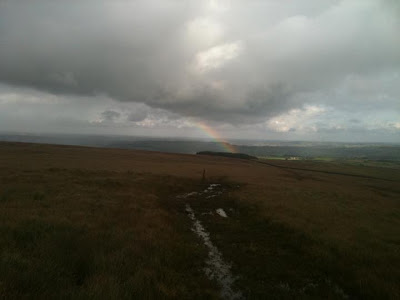
I'm very fortunate to live in the middle of the Pennines, on the border between Lancashire and West Yorkshire, and have the countryside on my doorstep. Although I do find it difficult to get anywhere (for example, in my new job in Leeds, it takes me 4 hours to get there and back on public transport, whereas it should be an hours' drive!!), the scenery more than makes up for it.
Hills


I still take it for granted however, as much as I appreciate it. I don't go out walking as much as I should do (though I'm now limited in time because of my commute to work), and I don't make the time to go out and explore. For example, there's a hill you can see from my living room that I've wanted to climb for ages, purely for curiosity, and it took me 6 months to actually get around to doing it. In the end, I couldn't actually get to the top anyway, because I took my dog, and being a big lummoxy labrador he struggles to get over some stiles, and there was one right at the top that he couldn't manage, but it was a beautiful walk, and I found places close to my house that I didn't even know existed, and it only took me 2 hours altogether!!

We British are very good at whinging and moaning about our country - about all the things wrong with it (myself included) - and wanting to get away to more tropical places - but we rarely take the opportunity to actually look around us and appreciate what we have.

This year is perhaps the best to do so. All eyes are on us this year, after the successful (albeit drizzly) Diamond Jubilee weekend (kudos to Gary Barlow for an incredible concert, just wish I could have been in London for it!), and now the run up to the Olympics (20 days to go apparently - can't decide whether I wish I lived in London or am very glad that I'm well out of the way for this. I know what a lot of Londoners think!!) and it's time to show them what we've got.

The weather's been doing an admirable job the past few weeks of showing the world what a British summer really is, perhaps to a more extreme level than any of us were really expecting (could have done without the floods thanks!), or maybe it's just getting all of the rain out of the way before the world descends on us. Who knows. But it made me think - what does it actually mean to be British? (I'll try and avoid the cliches but they're there for a reason!) People visiting for the Olympics - this might help you adjust to our weird quirks and traditions!

1. Queuing
Sorry, I know I said I'd avoid the cliches, but this one is my favourite. Dan Izzard tweeted one of my favourite things when England went out of the Euros on penalties (yet another English tradition): 

"Penalty kick - the English way to exit a tournament. Queuing."

It's so true! We queue for everything - there's even a Wimbledon Guide to Queuing! When people (usually tourists who don't understand the importance of a queue) push in front however, there's no public outcry or rioting. Just mumbling, tutting and eye rolling, as well as a fierce glare at the back of their head (but never make eye contact). 

2. Self-deprecating humour

We Brits know we're a bit odd and actually, we're quite proud of it. We know we're rubbish at most sports, and the ones we're actually good at (cricket, and occasionally rugby) no-one really cares about. There are never parties on the streets when England win the Ashes, and although a few people got a bit excited when we won the rugby World Cup a few years ago, it never really recreates the atmosphere of when we lose miserably in the Euros/World Cup.

However, a miserable defeat in the quarter finals and everyone gets drunk and celebrates the fact we even got that far and, hey, at least it wasn't against Germany! When Murray does well at tennis, the first thing everyone does is take the micky out of him for showing a bit of emotion. Brilliant!

3.  Comedy

The Americans will always be the best at sit-coms, but we're fantastic at panel shows and stand-up comedy. This links to our fondness of self-deprecating humour; topical panel shows do nothing but take the mick out of the news and the British way of life. Mock the Week, Have I Got News for You, Would I Lie to You - all involve a large quantity of self-deprecating humour and we're very good at it!

Americans are notoriously proud of their country which is why such shows wouldn't work there, but not us Brits! We love slagging ourselves off, and laughing at stereotypical (but true) humour! Same goes for stand-up - observational comedy does nothing but take the mick out of the odd things we do in everyday life, and us Brits love it! That's why comedians such as Peter Kay, Michael McIntyre and Dara O'Briain are so popular!

4. The Great Outdoors

Ok, so we might not have spectacular beaches, huge mountains or anything to shout about, but that's not the British way. Our hills, rolling green fields and reserved features are nothing to shout about, but beautiful in their own quiet way. We don't have to yell about our rugged peaks like the Americans and the French, or our stunning tropical beaches like Australia and south-east Asia. We simply accept that our quiet, modest countryside is beautiful in our own little way. There is still plenty of walking, rock climbing and other adventurous stuff to be done; the difference is that, although it's not quite as good as everyone else's, it'll do for us and we have it to ourselves!

Countryside

Snow in York

Wardle


Countryside

 
York


Ealees


Loch Ness


Littleborough


Blackstone Edge

Glyder Mountains


Scotland


Scotland


Glyders


Lake District


York


Wales


Wales


These are all photos I’ve taken on various trips around the UK in the past four years, in England, Wales and Scotland (haven’t yet made it over to Ireland unfortunately). The British countryside is stunning and we need to appreciate what we have.

5. Tradition
We laugh at people who do it, but in reality we’re all traditionalists inside. Whether it’s a bit of Pimms i the garden in the summer, Christmas decorations on the 1st December, strawberries and cream at Wimbledon or just a pint of beer in an evening, it’s all very stereotypically British!

Of course, if you wanted to take it one step further, one could have a fry-up for breakfast, a picnic for lunch and a cream tea in the afternoon, but that’s entirely up to you! One of our biggest traditions of course is the Royal Family. Love them or hate them, they’re not going anywhere! Personally, although I wouldn’t call myself a royalist, I quite like them. They’re a huge part of our history and, although they don’t play a pivotal role in today’s society, and some argue they’re a massive drain on our resources, but we’d certainly notice if they weren’t there.

What do tourists come to London to see? Buckingham Palace and the Queen? What always happens on Christmas Day? The Queen’s speech. Who would we laugh at if not for Prince Phillip’s racist comments, and Harry’s ill-advised Nazi costumes! Again, it all comes down to the self-deprecating humour. We know they’re  a bit poncy and a bit silly, but we wouldn’t be without them. A comedian (I can’t remember who – think it was Jimmy Carr but I could be wrong) once likened them to someone’s Nan; they’re old, archaic and a little bit racist, but you can’t help but be fond of them and glad to have them around.

6. Community Spirit
I live in a little part of the Pennines that houses one of my favourite places in the whole wide world. Hebden Bridge. It’s a gorgeous little town filled with independent businesses, little cafes, jewellery shops etc, set next to a canal and a river in the heart of West Yorkshire. I’ve been going there ever since I was a small child (my Mum’s best friend used to own a shop there), and I love it. I take anyone who ever comes to visit me and they all love it too. Unfortunately, it’s situated in the Calder Valley, and when we have a month as wet as we’ve just had, it tends to flood. Last weekend however, it had the worst flooding it’s ever experienced and many shops, cafes and other businesses were very seriously affected.


It started to get bad quite late at night, so by the time the flood sirens were going off, most people were stuck outside Hebden and couldn’t get to their businesses. Those that could were handing out sandbags and quickly trying to get their stock above ground level, but some to no avail. Most businesses in that little town lost a huge quantity of their stock that night, and their shops were ruined.

As they’re independent, they have no-one to fall back on but themselves, and loss adjusters told quite a few shops to gut the contents and start from scratch. Can you imagine how heartbreaking that must be? To have built up a beautiful little business from scratch, and have it completely ruined overnight? Even those who could salvage the contents faced long hours of cleaning, re-building, re-making stock, painting and generally making the shops look like shops again.

Despite the heart-break that everyone faced however, people clubbed together, and it’s things like this that make me proud to be British. People were keeping each other informed through social media of the situation whilst the flooding was happening, then all the shop-owners were on scene in the early hours of the next morning, far before the Council or the Environment Agency, to survey the damage and start clearing up the mess. Those who owned cafes kept people going by supplying coffee and chocolate; volunteers came from far and wide to help with the cleaning; shops such as the Yorkshire Soap Company were selling imperfect products, not to provide funds just for their business, but to help ALL businesses affected by the flooding.

Throughout the next week, whenever somebody had a carpeter, an industrial cleaner, or something that others might fund useful, it was offered through social media throughout the community to help get the town back on its feet, all provided out of the goodwill of the business owners to each other.

A primary school was one of the worst places affected by the floods, but as a result of a stream of helpers and volunteers, it was open to pupils again within a few days.

I went to Hebden last week, and it’s an odd sight. Driving through, there are still houses with furniture piled up in the front garden where they’ve obviously had to get rid of the whole living room. Some businesses are unfortunately still boarded shut, having to gut their entire shop and start again. Most however, after a hard few days, are open for business and proudly so! The town was busy with people wanting to give back to the struggling business-owners and keep the town going!

 A hand-made parade was planned for the weekend of the floods, but it wasn’t cancelled, and went ahead the very next weekend! The community spirit of each business allowed Hebden Bridge to keep going as normal, limping slightly but still proud of who it is.

It’s things like this that make me proud to be British.

Please support local, independent businesses where you can; if you’re anywhere near, please support Hebden Bridge or Todmorden and Mytholmroyd which were also badly affected) by visiting, or buying things from any of the shops online or visiting their websites:

Element Jewellery - http://www.elementjewellery.com/
Heart Gallery - http://www.heartgallery.co.uk/
Yorkshire Soap Company - http://theyorkshiresoapcompany.co.uk/en/
Spirals - http://www.spiralsfairtrade.co.uk/
A White Room - http://www.awhiteroom.com/
The Book Case - http://www.bookcase.co.uk/
Hebden Bridge Tourist Information - http://www.hebdenbridge.co.uk/hb2.html
Organic House - http://www.organic-house.co.uk/